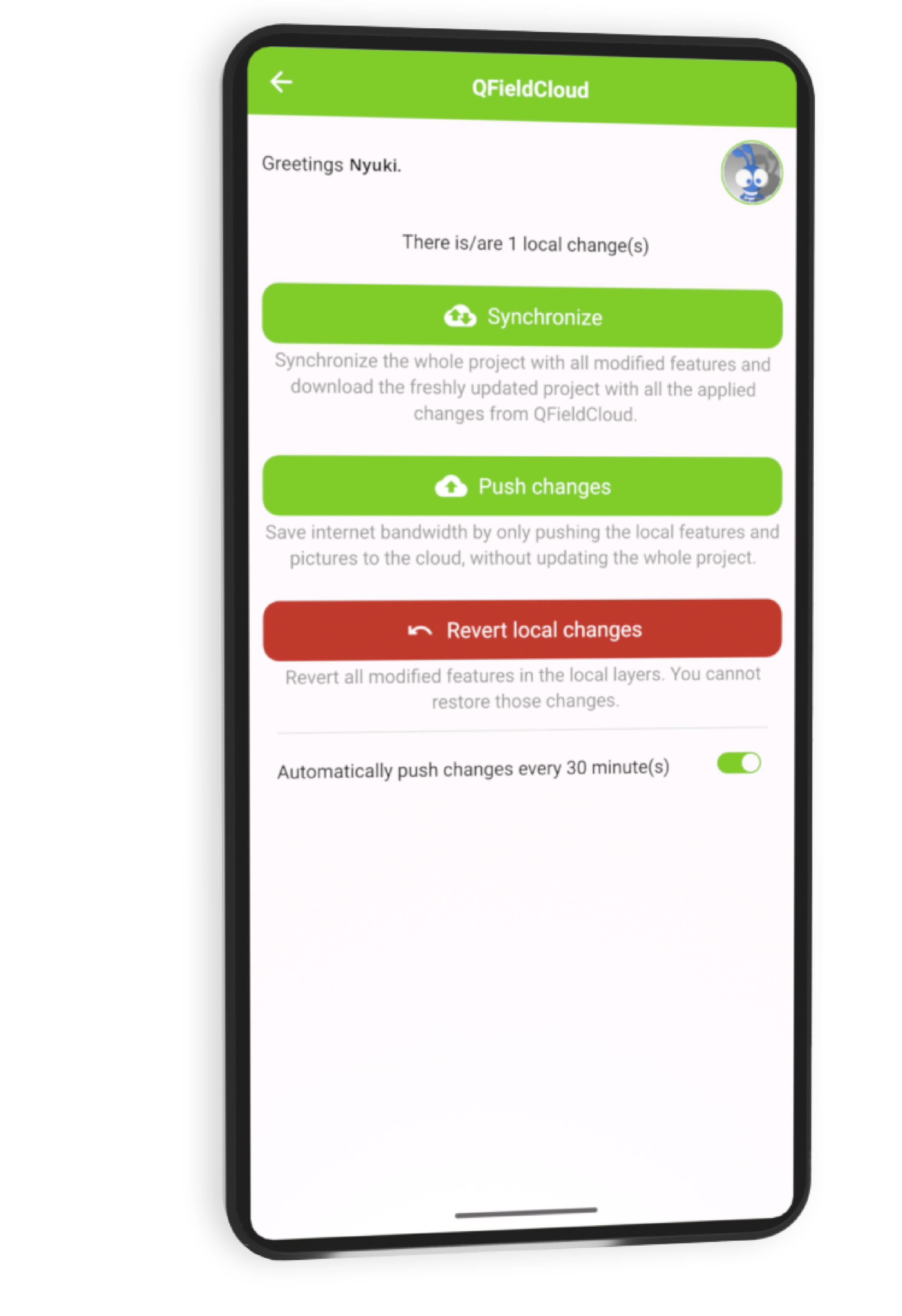
Synchronise
and collaborate.
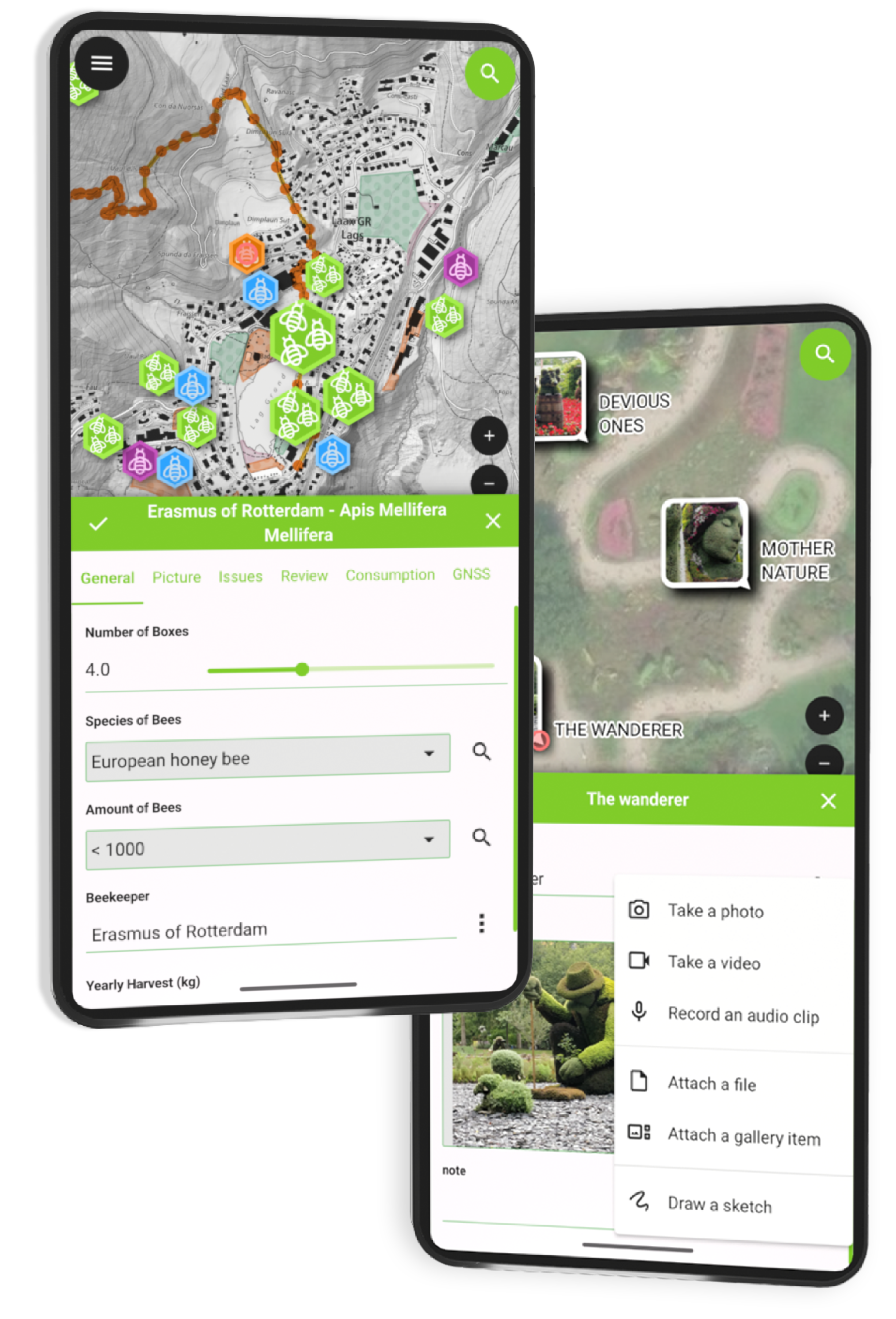
Collect
and edit data.
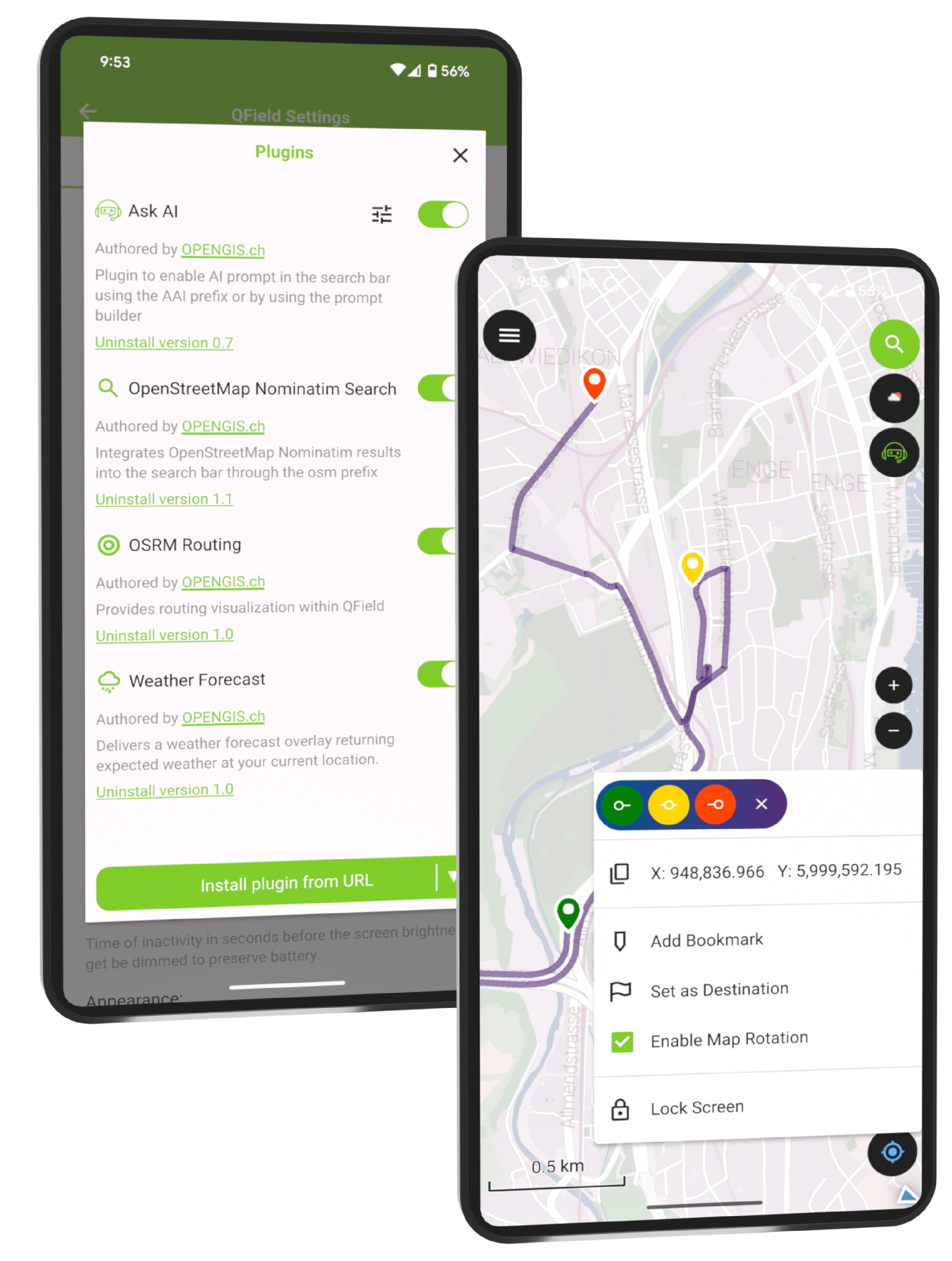
QFieldCloud allows to synchronize and merge the data collected by your team in QField. From small individual projects to large data collection campaigns, QFieldCloud removes the pain from synchronizing and merging data.

Sync projects and data in real time and work with GeoPackages, KML, GPX, georeferenced PDFs, and more.

Create rich survey forms with constraints, logic, defaults, and validations — all in QGIS.

Working in the wild ? You can continue to work seamlessly with QFieldCloud, and sync back your changes once you're back in town.

QFieldCloud perfectly integrates and extends your QGIS based geodata infrastructure.

Subscribe for a worry-free Swiss-made solution hosted on Swiss datacenters or contact us for your private cloud instance.

QFieldCloud code is open source so you can see what is actually happening to your data.
Let QFieldCoud manage it. Accurately, efficiently, and anywhere it matters. Get started now
This evolution is rooted in omotenashi (wholehearted hospitality) and monozukuri (the art of making things). Whether it’s a high-budget video game or a traditional tea ceremony, there is a meticulous attention to detail that defines the Japanese approach to creativity. Anime and Manga: The Global Vanguard
The most visible pillars of the industry are anime and manga. Unlike Western comics, which were historically viewed as "for kids," manga in Japan covers every conceivable genre—from high-stakes corporate drama to gourmet cooking.
You cannot understand modern Japanese entertainment without acknowledging its past. The influence of (stylized drama) and Bunraku (puppetry) is evident in the dramatic pacing and character designs of modern animation. caribbeancom 021014540 yuu shinoda jav uncensored updated
The Japanese entertainment industry is a global powerhouse, blending centuries of rigid tradition with a relentless drive for technological innovation. From the neon-soaked streets of Akihabara to the quiet dignity of a Noh theater, Japan’s cultural exports—often referred to as "Cool Japan"—have transformed the country from a post-war industrial hub into a premier cultural influencer. The Foundation: Harmony Between Old and New
Anime has become a primary vehicle for Japanese soft power. It introduces global audiences to Japanese food (ramen, onigiri), social norms (bowing, school life), and spiritual concepts (Shintoism and Yokai). The Idol Industry and J-Pop Unlike Western comics, which were historically viewed as
What makes Japanese entertainment unique is its "Galapagos-style" evolution. Because Japan has a massive domestic market, its culture often develops in isolation, creating distinct aesthetics that the rest of the world eventually finds fascinating.
The industry currently faces a crossroads. A shrinking, aging population means the domestic market is tightening, forcing companies to look outward. This has led to a surge in collaborations with platforms like Netflix and the global "simulcasting" of anime. The Japanese entertainment industry is a global powerhouse,
The Japanese entertainment industry is more than just a business; it is a reflection of a culture that values craftsmanship, collective identity, and a profound respect for storytelling. As digital borders continue to vanish, Japan's ability to turn niche traditions into global trends ensures its culture will remain a vital part of the world’s creative DNA.
While the world has shifted toward mobile and PC gaming, Japan maintains a robust "Game Center" (arcade) culture. These spaces act as social hubs, keeping the community aspect of gaming alive in a way that has largely vanished in the West. Furthermore, the "JRPG" (Japanese Role-Playing Game) remains a cornerstone of storytelling, emphasizing complex narratives and character development. Traditional Roots in Modern Media





QField and QFieldCloud form the leading professional fieldwork platform used in enterprise settings for efficient geospatial data collection, synchronization, and management. As Digital Public Goods, they not only excel in enterprise and professional applications but also contribute significantly to advancing at least six of the United Nations Sustainable Development Goals (SDGs), promoting a more sustainable and equitable future.
Subscribe to our newsletter and stay up to date on the latest and greatest!
QField is released under the GNU Public License (GPL) Version 2 or above. QFieldCloud is released under the MIT License. Developing our solutions under these licenses means that you can inspect and modify the source code and guarantees that you will always have access to a complete QGIS-based field data collection and synchronization platform that is free of cost and can be freely modified.
View our Legal Information to learn about our privacy policy, terms of service, data processing agreement (DPA), and other legal matters.
QField, QFieldCloud and QFieldSync are developped by OPENGIS.ch. OPENGIS.ch offers consulting, development, training and support for open-source software including QField, QGIS and PostGIS.