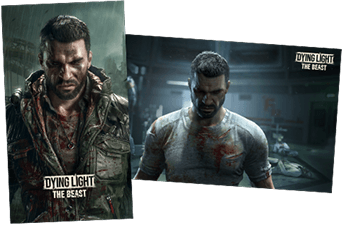
You are Kyle Crane.

After being captured by the Baron and enduring his painful experiments for years, you escape. But the scars remain. Left on the edge of humanity with both human and zombie DNA, you struggle to control your inner beast and the conflict that comes with it. But you’ll need to, if you want to get your revenge on the man who did this to you.

Restore the land Step by step

Clear the city of the infected, restore the land of Castor Woods and watch hope return as survivors reclaim their lives with your help - step by step.

half
survivor beast

Become Kyle Crane, a unique hero with DNA of a survivor… and a beast.

Switch between two playstyles and experience a fierce inner conflict between man and monster, leading to the ultimate embrace of unstoppable strength.

Kyle Crane Survivor Kyle Crane Beast

Primal Brutality

Take the raw savagery of Dying Light’s combat to the extreme and push brutality beyond human limits as you crush skulls, rip heads off, and tear enemies in half as you struggle to control our hero's constantly evolving, rage-fueled, beast-like powers.

mamlakati nur mamlakati nur

Own Day Fear the night

A signature of the Dying Light series - the two vastly different experiences of day and night merge into one unforgettable whole. Scavenge and explore by day, mindful of the constant tension of the moving clock - as when the sun sets, the night unleashes horrors that leave you with only three choices: run, hide, or fight for your life.

Run the Rooftops, Rule the Roads

Feel the rush of best-in-class first-person parkour as you jump from rooftop to rooftop and climb over any obstacle using a movement system accessible to all, yet rewarding to those who master it. Then take the wheel of an off-road vehicle and plow through hordes of zombies, enjoying the unparalleled freedom of open world traversal.

Beautiful Zombie Apocalypse

Breathtaking next-gen visuals bring the handcrafted zombie apocalypse to life, where every detail tells a story of survival. Get lost in the majesty of the Swiss Alps-inspired valley of Castor Woods with various biomes - the touristic town, the industrial area, the national park, farm fields, the swamps - all full of beauty… and decay.

Mamlakati Nur Fix ✧

In a modern context, Mamlakati Nur has taken on new meanings. It is frequently used in creative works, branding, and community projects to evoke a sense of hope and excellence. For instance, educational institutions or humanitarian organizations might adopt the name to signify their commitment to "enlightening" the minds of the youth or bringing help to the "darker" corners of society.

Historical references to Mamlakati Nur often surface in the poetry and literature of Central Asia and the Middle East. Classical poets used the term to describe a utopian land or a spiritual destination that travelers could only reach through inner purification. It was often depicted as a place where the sun never sets, symbolizing eternal knowledge and the unwavering presence of the creator. mamlakati nur

The architectural interpretation of this concept is also significant. Throughout history, Islamic architecture has mastered the use of light as a primary building material. Through intricate latticework (mashrabiya), reflective tiling, and grand domes, architects aimed to create physical spaces that felt like a Mamlakati Nur—a physical manifestation of divine light on earth. In a modern context, Mamlakati Nur has taken on new meanings

The etymology of the phrase combines "Mamlakat" (country or kingdom) and "Nur" (light). In many Eastern philosophies and mystical traditions, light is not merely the absence of darkness but the presence of truth and wisdom. To speak of a kingdom made of light is to describe a society or a state of being where justice and transparency prevail over corruption and ignorance. Historical references to Mamlakati Nur often surface in

Mamlakati Nur, which translates to "The Kingdom of Light," is a concept that resonates deeply across various cultural, spiritual, and historical contexts. Whether interpreted as a literal geographical entity from ancient lore or a metaphorical state of enlightenment, it represents a universal human aspiration for peace, clarity, and divine connection.

Spiritually, the journey to the Kingdom of Light is seen as an internal one. It involves shedding the "veils" of the ego—pride, greed, and envy—to reveal the light that exists within every individual. Many meditative practices focus on this internal illumination, suggesting that the Kingdom of Light is not a place one finds on a map, but a state of consciousness one achieves through discipline and love.

Ultimately, Mamlakati Nur serves as a powerful reminder of what humanity can achieve when guided by positive values. It stands as a beacon for those seeking a better world, reminding us that light, no matter how small the spark, always has the power to overcome the dark. Whether through art, faith, or social progress, the pursuit of this "Kingdom of Light" remains one of the most enduring themes in human history.

Get one of the Dying Light: The Beast editions

mamlakati nur

Contains

+ Digital content

  • Wallpapers pack
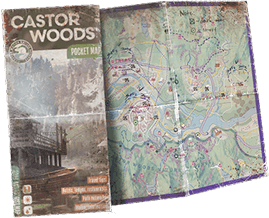
  • Castor woods<br>tourist map
  • Soundtrack

Contains

Everything From The Deluxe Edition And:

In a modern context, Mamlakati Nur has taken on new meanings. It is frequently used in creative works, branding, and community projects to evoke a sense of hope and excellence. For instance, educational institutions or humanitarian organizations might adopt the name to signify their commitment to "enlightening" the minds of the youth or bringing help to the "darker" corners of society.

Historical references to Mamlakati Nur often surface in the poetry and literature of Central Asia and the Middle East. Classical poets used the term to describe a utopian land or a spiritual destination that travelers could only reach through inner purification. It was often depicted as a place where the sun never sets, symbolizing eternal knowledge and the unwavering presence of the creator.

The architectural interpretation of this concept is also significant. Throughout history, Islamic architecture has mastered the use of light as a primary building material. Through intricate latticework (mashrabiya), reflective tiling, and grand domes, architects aimed to create physical spaces that felt like a Mamlakati Nur—a physical manifestation of divine light on earth.

The etymology of the phrase combines "Mamlakat" (country or kingdom) and "Nur" (light). In many Eastern philosophies and mystical traditions, light is not merely the absence of darkness but the presence of truth and wisdom. To speak of a kingdom made of light is to describe a society or a state of being where justice and transparency prevail over corruption and ignorance.

Mamlakati Nur, which translates to "The Kingdom of Light," is a concept that resonates deeply across various cultural, spiritual, and historical contexts. Whether interpreted as a literal geographical entity from ancient lore or a metaphorical state of enlightenment, it represents a universal human aspiration for peace, clarity, and divine connection.

Spiritually, the journey to the Kingdom of Light is seen as an internal one. It involves shedding the "veils" of the ego—pride, greed, and envy—to reveal the light that exists within every individual. Many meditative practices focus on this internal illumination, suggesting that the Kingdom of Light is not a place one finds on a map, but a state of consciousness one achieves through discipline and love.

Ultimately, Mamlakati Nur serves as a powerful reminder of what humanity can achieve when guided by positive values. It stands as a beacon for those seeking a better world, reminding us that light, no matter how small the spark, always has the power to overcome the dark. Whether through art, faith, or social progress, the pursuit of this "Kingdom of Light" remains one of the most enduring themes in human history.