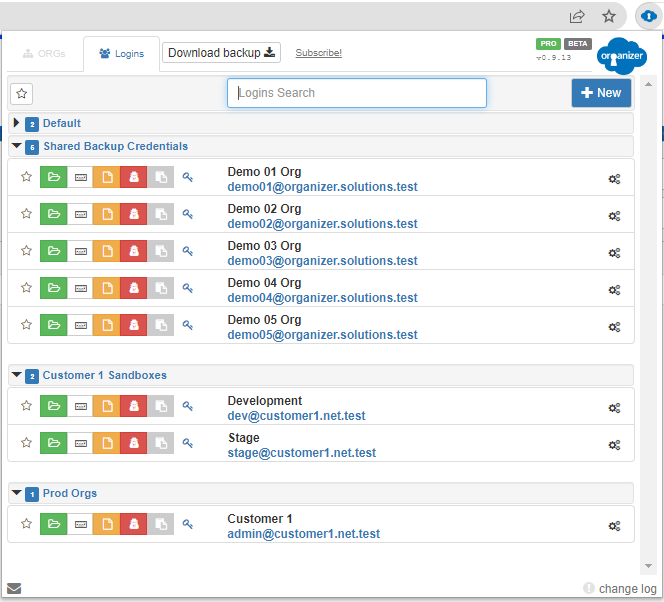
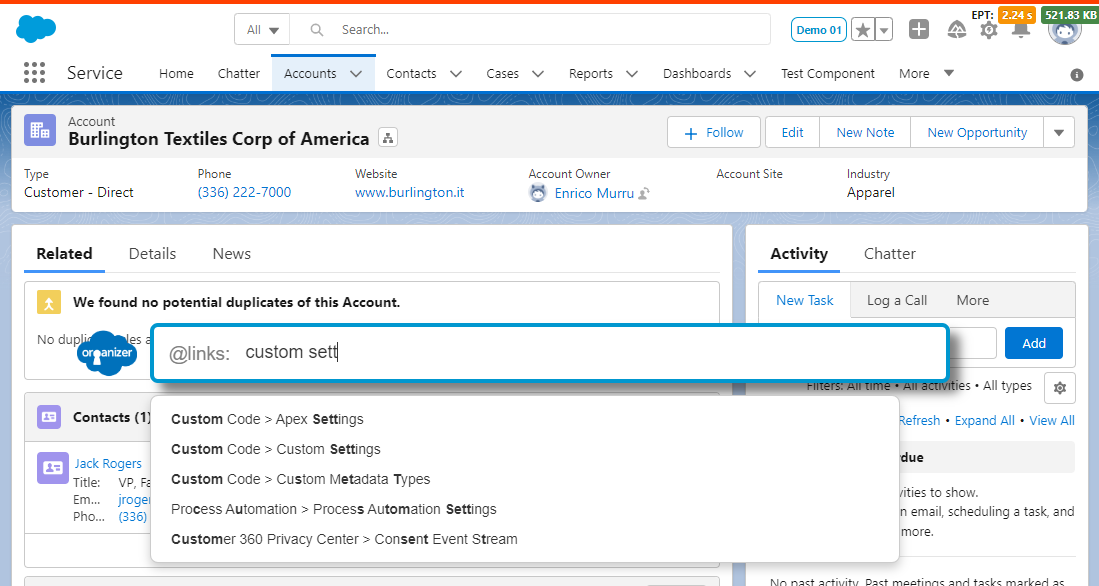
ORGs customization
Configure Salesforce tabs' icons and titles
If migration is not immediately possible, organizations should implement strict compensating controls. This includes placing the legacy application behind a Web Application Firewall, employing strict input validation, and running the service with the least possible privileges. However, these are temporary stopgaps and do not solve the underlying security debt inherent in version 4.0.30319.
The most severe vulnerabilities affecting .NET 4.0.30319 involve Remote Code Execution. These flaws typically reside in how the framework handles memory or processes specific types of input. One common vector involves the processing of untrusted data through the framework's libraries. If an attacker can send a specially crafted request to an application running on this version, they may be able to execute arbitrary code with the same permissions as the application. microsoft net framework 4.0 v 30319 vulnerabilities
Running .NET Framework 4.0.30319 in a production environment today is a high-risk endeavor. Since Microsoft no longer issues security updates for this specific version, the primary recommendation is to migrate to a supported version. The most severe vulnerabilities affecting
Security flaws in .NET 4.0.30319 also extend to information disclosure. These vulnerabilities might allow an attacker to read sensitive files on the server or gain insight into the system's memory layout, which can be used to facilitate more complex attacks. Furthermore, Elevation of Privilege vulnerabilities exist where a user with low-level access can exploit the framework to gain administrative rights. This often occurs due to improper boundary checks within the runtime environment. The Danger of Insecure Deserialization If an attacker can send a specially crafted