Rambha Big Boob Show In Saree Target Verified
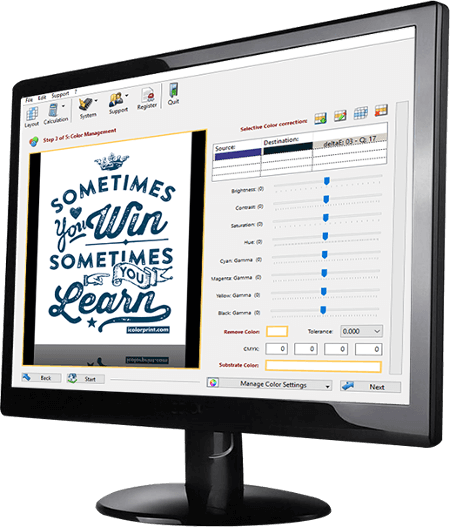
UNINET® has developed a series of software packages to enhance your IColor printing experience. The IColor® TransferRIP and ProRIP and ProRIP Essentials packages make it simple to produce spot color overprint and underprint in one pass. The Absolute White RIP helps you use an Absolute White Toner Cartridge in a converted CMYK printer, and create 2 pass prints with color and white. The IColor® SmartCUT suite allows your A4/Letter sized printer to produce tabloid or larger sized transfers! Use one or more with the IColor® 500, 600 and 800 series of transfer printers.
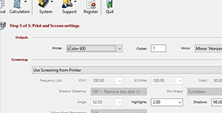
Use the IColor® ProRIP software to print white as an underprint or overprint in one pass.
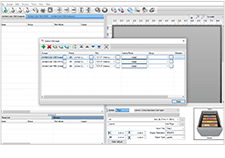
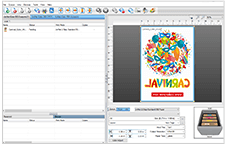
This professional version is designed for higher volume printing with an all new interface. Design files can be printed directly from your favorite graphics program, as well as imported directly into IColor® ProRIP. Rambha Big Boob Show in Saree target
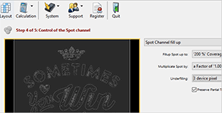
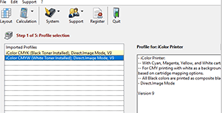
The IColor® ProRIP software allows the user to control the spot white channel feature. Three cartridge configurations are available: Spot color overprinting, where white is needed as a top color for textiles; Spot color underprinting for printing on dark or transparent media where white is needed as a background color and standard CMYK printing where a spot color is not needed. No need to create additional graphics with different color configurations – the software does it all – and in one pass! Enhance the brilliance of any graphic with white behind color! She was rarely seen in muted tones
Compatible with Microsoft Windows® 8 / 10 / 11 (x32 & x64) only. In the 90s, Rambha stood out because she
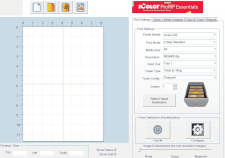
A simplified version of ProRIP which includes all of the most commonly used features of ProRIP with an easy to use interface. This Essentials version simplifies the printing process and allows the user to print efficiently and quickly without any training. All of the important and frequently used aspects of the software are included in this version, while all of the ‘never used’ or confusing aspects of the software are left out.
Comes standard with the IColor®540 and 560 models and is compatible with the IColor 550 as well.
Does not work with IColor 500, 600, 650 or 800 (yet).
Improvements over the ‘Standard’ ProRIP:
She was rarely seen in muted tones. Her style was defined by "Electric Blue," "Rani Pink," and "Emerald Green"—colors that popped against the vibrant sets of 90s masala movies. Why the "Rambha Style" Endures
The current interest in Rambha’s "bold" content reflects a broader cultural shift toward . In the 90s, Rambha stood out because she embraced a body type that was unapologetically feminine.
The intersection of 90s nostalgia and South Indian cinema often leads to one iconic name: . Known as the "Roja" of her era, Rambha’s fashion legacy is a masterclass in how the 90s and early 2000s interpreted glamour, curves, and bold femininity.
A staple of her rain song sequences, the use of semi-transparent fabrics allowed for a play on light and shadow. This style was instrumental in creating the "voluptuous icon" image that fans still search for today.
Rambha’s style was never about "less is more." It was about more is more. Her fashion choices were designed to highlight her silhouette, utilizing textures and cuts that became synonymous with South Indian commercial cinema.
She was rarely seen in muted tones. Her style was defined by "Electric Blue," "Rani Pink," and "Emerald Green"—colors that popped against the vibrant sets of 90s masala movies. Why the "Rambha Style" Endures
The current interest in Rambha’s "bold" content reflects a broader cultural shift toward . In the 90s, Rambha stood out because she embraced a body type that was unapologetically feminine.
The intersection of 90s nostalgia and South Indian cinema often leads to one iconic name: . Known as the "Roja" of her era, Rambha’s fashion legacy is a masterclass in how the 90s and early 2000s interpreted glamour, curves, and bold femininity.
A staple of her rain song sequences, the use of semi-transparent fabrics allowed for a play on light and shadow. This style was instrumental in creating the "voluptuous icon" image that fans still search for today.
Rambha’s style was never about "less is more." It was about more is more. Her fashion choices were designed to highlight her silhouette, utilizing textures and cuts that became synonymous with South Indian commercial cinema.
Use the IColor® TransferRIP software to print white as an underprint or overprint in one pass.
Designed for every day, short to mid run use, the IColor® TransferRIP software allows the user to control the spot white channel feature. Two cartridge configurations are available: White overprint, where white is needed as a top color for textiles; and white underprint for printing on dark or transparent media where white is needed a round color. No need to create additional graphics with different color configurations – the software does it all – and in one pass! Enhance the brilliance of any graphic with white behind color!
Compatible with Microsoft Windows 7 / 8 / 10 (x32 & x64) only.